
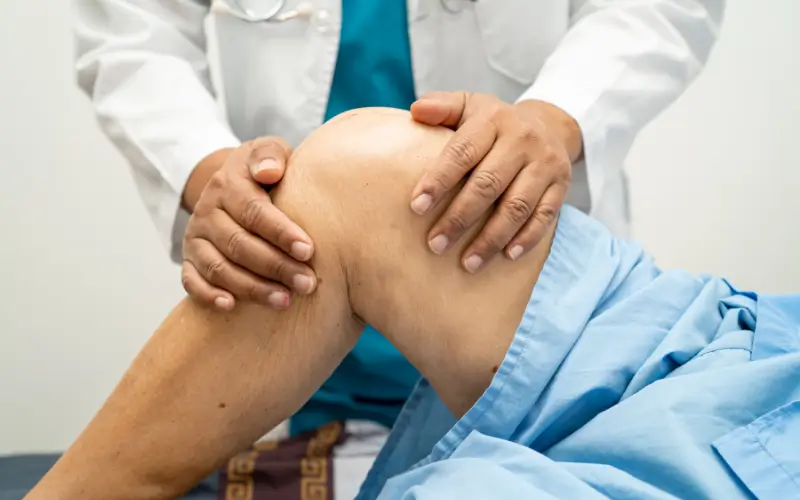
Total joint replacement surgery has transformed the lives of millions of people worldwide, offering a path to pain-free movement and restored quality of life.
When chronic joint pain becomes unbearable and conservative treatments fail to provide relief, joint replacement emerges as a highly effective solution with success rates ranging between 95% to 98%.</p>
Understanding when this procedure becomes necessary and what to expect during recovery can help you make informed decisions about your orthopedic health.</p>
Understanding Total Joint Replacement Surgery
Total joint replacement, also known as arthroplasty, is an advanced surgical procedure where damaged or diseased joints are removed and replaced with artificial prosthetic components made of metal, plastic, ceramic, or a combination of these materials.
The primary goal is to eliminate chronic pain, restore joint function, and improve overall mobility for individuals suffering from severe joint deterioration.</p>
The most commonly replaced joints include the knee, hip, and shoulder, with over 2,00,000 knee replacement surgeries performed annually in India alone.
The main medical indication for joint replacement surgery is osteoarthritis, which leads to reduced function and quality of life.
However, other conditions such as rheumatoid arthritis, avascular necrosis (osteonecrosis), post-traumatic arthritis, and severe joint injuries also warrant surgical intervention.
As joint damage progresses, cartilage wears away completely, resulting in bone-on-bone contact that causes excruciating pain and significant functional limitations.
7 Warning Signs You May Need Joint Replacement
Recognizing the signs that indicate the need for joint replacement is crucial for timely intervention.
Persistent, severe joint pain that significantly impacts your daily activities and quality of life is the primary red flag.
This pain typically intensifies with physical activity and may eventually occur even during rest or while lying down.
Key indicators that joint replacement may be necessary include:
- Chronic pain unresponsive to treatment: When pain cannot be adequately controlled with medications, injections, physical therapy, or other non-surgical treatments.
- Severe mobility limitations: Difficulty performing daily tasks such as walking, climbing stairs, standing from a chair, or getting dressed.
- Morning stiffness lasting more than 30 minutes: Joint stiffness that persists long after waking and interferes with normal function.
- Bone-on-bone contact visible on X-rays: Imaging revealing significant joint damage with complete cartilage loss indicating advanced arthritis.
- Mechanical symptoms: Buckling, clicking, grinding, locking, or limping that may compromise your safety.
- Pain disrupting sleep: Significant joint discomfort that keeps you awake despite medication use.
- Joint deformity or significant swelling: Visible changes in joint structure accompanied by persistent inflammation.
The majority of patients who undergo total joint replacement are between the ages of 50 and 80, though orthopedic surgeons evaluate candidates individually based on overall health, weight, severity of condition, and potential surgical risks.
4 Types of Joint Replacement Procedures
1. Hip Replacement
Hip replacement surgery involves replacing the damaged hip joint with an artificial one made of metal, plastic, or ceramic components.
This procedure addresses conditions like osteoarthritis, rheumatoid arthritis, and avascular necrosis that destroy the hip’s ball-and-socket joint.
Recent href=”https://pubmed.ncbi.nlm.nih.gov/29310918/” target=”_blank” rel=”noopener”>research shows that cemented femoral stems had a significantly lower cumulative rate of all-cause revision compared to uncemented femoral stems in certain patient populations.
2. Knee Replacement
Knee arthroplasty is the most common joint replacement surgery, involving removal of damaged bone and cartilage from the knee and replacing them with artificial prostheses made of metal and polyethylene.
The procedure can be partial, replacing only damaged portions, or total, involving replacement of the entire joint.
Elective total knee arthroplasty is considered medically necessary for conditions including post-traumatic arthritis, advanced osteoarthritis, and rheumatoid arthritis.
3. Shoulder Replacement
Shoulder replacement surgery targets the shoulder’s ball-and-socket joint and is recommended for patients with advanced osteoarthritis, rheumatoid arthritis, rotator cuff tears, or proximal humerus fractures not amenable to internal fixation.
Anatomic shoulder replacement involves replacing the top of the arm bone with an artificial metal stem, while reverse shoulder replacement is more suitable for patients with significant rotator cuff injuries.
4. Other Joint Replacements
Additional joint replacement procedures include elbow, wrist, and ankle replacements, though these are less common.
Ankle replacement is often recommended for severe ankle arthritis when other treatments have failed, while wrist and elbow replacements address severe arthritis that prevents proper movement and function.
Preparing for Joint Replacement Surgery
Proper preparation significantly improves surgical outcomes and recovery.
Four to six weeks before surgery, patients should attend joint education programs, complete medical clearance with their primary care physician, and begin prehabilitation exercises.
Walking at least 30 minutes daily builds stamina, while daily strengthening exercises prepare muscles for the recovery ahead.
One to two weeks before surgery, key preparation steps include:
- Completing pre-operative visits and pre-admission testing with hospital nurses.
- Stopping medications and supplements that cause internal bleeding.
- Increasing daily protein intake to support healing.
- Starting stool softeners if prone to constipation or sensitive to narcotics.
- Beginning deep breathing exercises to improve lung function.
The day before surgery requires two baths using prescribed skin prep products and drinking 10 oz. of carbohydrate drink as directed by physicians.
Patients should stop shaving their legs, pack their hospital bag with personal hygiene items and a list of current medications, and ensure someone will be available at home for post-surgery support.
What to Expect During Joint Replacement Recovery
-
Immediate Post-Operative Period (Days 1-7)
The first week after surgery focuses on pain management, preventing complications, and beginning gentle movement.
Patients typically experience significant pain and swelling that is controlled through prescribed medications.
Physical therapy begins within 24-48 hours of surgery, focusing on assisted movement and basic exercises to prevent stiffness and blood clots.
During this critical phase, patients use assistive devices like walkers or crutches and receive guidance on functional activities such as moving in bed, transferring from bed to chair, using the bathroom, and gradually increasing safe walking distances.
The physical therapist ensures patients can perform these activities safely before discharge.
-
Early Recovery (Weeks 2-6)
As pain and swelling gradually decrease, patients continue with physical therapy sessions four times daily at home or through outpatient facilities.
The focus shifts to regaining range of motion, building strength, and improving balance.
For knee replacement patients, physical therapy ensures the knee regains proper bending and straightening ability along with balance and strength.
Shoulder replacement recovery progresses more gradually due to the joint’s greater range of motion.
Physical therapists begin with passive exercises where they move the joint, gradually advancing to assisted exercises, and finally to strength-building exercises once patients can move independently.
-
Intermediate Recovery (Weeks 6-12)
By this stage, most patients experience significant reduction in pain and swelling along with increased strength and mobility in their new joint.
The use of assistive devices decreases substantially, and many patients stop using walking aids during this period.
The focus shifts to building strength, improving balance, and engaging in light activities that prepare patients for returning to normal routines.
-
Late Recovery (Months 3-6 and Beyond)
Most normal activities can be resumed during late recovery, although some high-impact activities may still be limited.
Patients continue working on strengthening and conditioning the muscles around the joint while achieving full range of motion and maximizing stability.
Full recovery can take up to a year or more depending on the individual and the type of joint replaced.
Understanding Complications and Success Rates of Joint Replacement Surgery
While joint replacement surgery is highly successful, patients should be aware of potential complications.
0 found that overall complication rates were 39.7% for total hip arthroplasty (THA) and 53.6% for total knee arthroplasty (TKA) patients within six months following surgery.
Additionally, major complications were reported by 9.5% of THA patients and 14.4% of TKA patients, while minor complications affected 34.0% and 46.6% respectively.
Factors associated with increased complication risk in hip replacement patients include increased BMI, previous hip replacement, and bilateral surgery.
For knee replacement patients, risk factors include heart disease, neurological disease, pre-operative back pain, and arthritis in separate joints.
Interestingly, female gender and previous knee replacement were identified as protective factors for minor complications in knee replacement patients.
Despite these risks, the long-term outcomes of joint replacement surgery remain overwhelmingly positive.
More than three-quarters of patients experience good outcomes, with 86.04% in the hip replacement group and 79.91% in the knee replacement group maintaining beneficial effects on quality of life for up to five years post-surgery.
The beneficial effect on quality of life observed during the first year after surgery is consistently maintained throughout this extended period.
Long-Term Outcomes and Lifestyle After Joint Replacement Surgery
Life after total joint replacement can be truly transformative for patients who once struggled with debilitating pain and limited mobility.
Many people experience significant reduction in pain and improved mobility, allowing them to return to activities they once enjoyed.
However, maintaining realistic expectations is essential, full recovery typically takes anywhere from six months to a year, and some individuals may continue to feel mild discomfort as they adjust to their new joint.
The longevity of artificial joints has improved dramatically with advances in materials and surgical techniques.
With proper care, modern joint implants can serve patients well for 15 to 20 years or longer.
Moreover, regular checkups with ref=”https://hthgaya.com/”>orthopedic specialists in Gaya help ensure everything progresses as expected and allow for early detection of any potential issues requiring attention.
Robotic-assisted surgeries are rapidly transforming the field of joint replacements by offering unmatched precision, reducing surgical trauma, and significantly improving outcomes.
These advanced procedures provide greater surgical accuracy in implant placement, reduced pain and minimal tissue damage, faster recovery with shorter hospital stays, lower risk of post-surgical complications, more natural joint feel and functionality, and better long-term implant survival rates.
Conclusion: Making the Decision
Deciding to undergo total joint replacement surgery is a significant decision that should be made in consultation with your orthopedic specialist.
When conservative treatments have been exhausted and quality of life continues to deteriorate due to severe joint pain and functional limitations, joint replacement offers a proven pathway to restored mobility and pain-free living.
The procedure’s high success rates, combined with continuous improvements in surgical techniques and implant technology, make it one of the most effective interventions available in modern orthopedic medicine.
Understanding the entire journey, from recognizing the warning signs to navigating the recovery process and embracing life with your new joint, empowers you to approach this life-changing procedure with confidence and realistic expectations.
So, if you’re considering total joint replacement surgery, you can contact the best orthopedic hospital in Gaya for advance treatment and proper care.