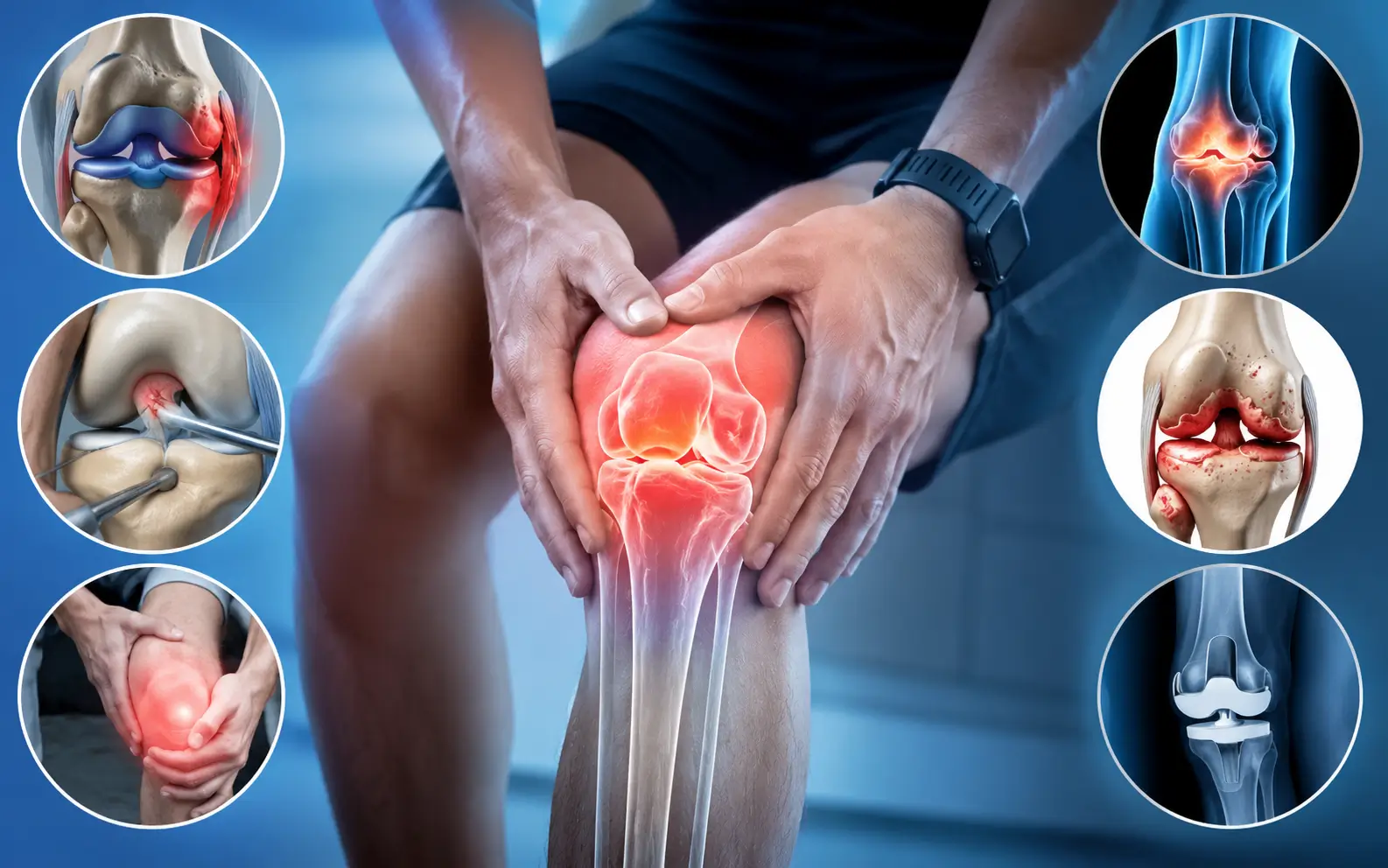
Your knee is one of the hardest-working joints in your body. Every time you stand up, climb a staircase, or simply shift your weight, your knee quietly absorbs and manages the forces involved until something goes wrong.
When knee pain arrives, it’s not just the physical discomfort that’s disruptive. It’s the sudden awareness of how many ordinary things depend on a joint you never had to think about before.
For many people in Gaya and across Bihar, the question that follows is familiar: is this serious enough to see a specialist, or will it resolve on its own?
This guide walks through the most common knee problems orthopedic doctors treat, what causes them, how they’re typically managed, and when it genuinely makes sense to stop waiting and book an appointment.
How Common Are Knee Problems in India?
Before getting into specific conditions, it’s worth understanding just how widespread knee problems are across the country.
A systematic review and meta-analysis published in the Journal of Family Medicine and Primary Care found that the pooled prevalence of knee osteoarthritis among elderly persons in India is 47%, meaning nearly half of older adults in India are affected by this single condition alone.
Globally, around 595 million people were living with osteoarthritis in 2020, and projections suggest knee osteoarthritis cases will increase by nearly 75% by 2050 as populations age.
For a country with India’s demographic trajectory, that’s not a distant statistic, it’s a present-day reality that thousands of families across Bihar are already navigating.
Beyond arthritis, sports-related knee injuries are equally significant. Research from a tertiary care centre in northern India found that ACL (anterior cruciate ligament) tears accounted for 86.5% of sports-related knee injuries, with meniscal injuries close behind at 78.24% of cases.
These aren’t just elite-athlete problems, they affect everyday people who play kabaddi, football, or simply move in ways that put sudden stress on the knee.
You can also read: Knee Pain In Young Adults: Causes, Treatment And When To See An Orthopedic Surgeon
The Most Common Knee Conditions Treated by Orthopedic Specialists
1. Knee Osteoarthritis
This is the single most common reason adults in India visit an orthopedic doctor. Osteoarthritis occurs when the cartilage, the smooth, cushioning tissue that lines the knee joint, gradually breaks down over time.
As that cushion wears away, bones begin to rub against each other, causing pain, stiffness, and swelling that typically worsens after activity or long periods of rest.
The condition tends to develop gradually, which is why many people dismiss early symptoms as normal aging. In reality, early intervention makes a significant difference.
When caught in its earlier stages, osteoarthritis can often be managed effectively through physiotherapy, weight management, targeted exercises, and non-surgical treatments like injections.
Waiting until the damage is severe frequently narrows the options considerably.
You can also read: Total Joint Replacement Surgery: When Its Needed And What To Expect
2. ACL (Anterior Cruciate Ligament) Tears
The ACL is one of the four major ligaments that stabilize the knee joint, and it’s one of the most commonly injured. ACL tears most often happen during sudden movements, a sharp pivot, an awkward landing from a jump, or a direct impact to the knee.
The injury is accompanied by a distinct, often audible pop, followed by immediate swelling and an inability to bear weight comfortably.
In India, non-contact mechanisms account for the majority of ACL injuries, meaning they frequently happen during everyday sports rather than high-speed collisions.
Treatment depends on the severity of the tear, the patient’s activity level, and their age. Partial tears with proper rehabilitation can sometimes recover without surgery, while complete tears in active individuals often benefit from surgical reconstruction to restore stability and prevent long-term joint damage.
3. Meniscal Tears
The menisci are two C-shaped pieces of cartilage that act as shock absorbers between the thigh bone and shin bone.
They can tear during the same kinds of twisting movements that cause ACL injuries, but they’re also vulnerable in older adults whose cartilage has become more brittle meaning a simple, everyday movement like getting up from the floor can sometimes cause a tear.
Symptoms include pain along the inner or outer edge of the knee, swelling, stiffness, and sometimes a locking or catching sensation when bending.
Depending on the size and location of the tear, treatment may range from rest and rehabilitation to arthroscopic surgery, a minimally invasive procedure that allows the surgeon to repair or trim the damaged tissue.
4. Patellofemoral Pain Syndrome (Runner’s Knee)
Despite its nickname, runner’s knee doesn’t just affect runners. It’s an extremely common condition characterized by pain around or behind the kneecap, typically triggered by activities that repeatedly bend the knee, climbing stairs, squatting, sitting for extended periods, or cycling.
The pain usually develops gradually rather than through a single injury.
The underlying cause is often a combination of muscle imbalance, poor movement patterns, or the kneecap tracking slightly out of its groove.
Most cases respond very well to physiotherapy and targeted strengthening exercises, making early assessment important before the problem becomes a persistent daily disruption.
5. Knee Bursitis
Surrounding the knee joint are small, fluid-filled sacs called bursae, which reduce friction between tissues during movement.
When these become inflamed, usually from repetitive pressure, prolonged kneeling, or a direct knock to the knee, the result is bursitis: localized swelling, warmth, and tenderness directly over the affected area.
It’s particularly common among people whose work involves frequent kneeling or extended time on hard surfaces.
Mild cases often resolve with rest and anti-inflammatory treatment, though persistent or recurring bursitis warrants specialist evaluation to rule out infection or other underlying causes.
6. Ligament Sprains and Collateral Ligament Injuries
The MCL (medial collateral ligament) and LCL (lateral collateral ligament) run along the inner and outer sides of the knee respectively, providing stability against sideways forces. These ligaments are commonly sprained during contact activities or falls where the knee is pushed inward or outward beyond its normal range.
Most MCL sprains heal well with conservative management, rest, bracing, and physiotherapy, though severe tears or injuries involving multiple ligaments may require surgical assessment.
Getting the grade of the injury evaluated early helps prevent what starts as a sprain from becoming a longer-term instability problem.
You can aslo read: Fracture Treatment And Recovery: What To Expect From An OrthoPedic Surgeon
7. Knee Joint Infections (Septic Arthritis)
A bacterial infection within the knee joint is a medical emergency. Septic arthritis causes rapid-onset severe pain, swelling, warmth, and fever, and it requires immediate attention.
Delayed treatment can cause lasting joint damage, making same-day evaluation at a facility with emergency orthopedic availability essential, not optional.
When Should You See an Orthopedic Specialist?
A practical rule of thumb: if knee pain has lasted more than two weeks without meaningful improvement, or is significantly limiting daily activity, it’s worth a proper assessment.
Seek urgent evaluation for sudden severe swelling after an injury, inability to bear weight, a knee that gives way or locks, or swelling combined with fever.
Many people delay care assuming knee pain is simply aging or will resolve on its own. Sometimes it does. But conditions like osteoarthritis and ligament injuries respond significantly better to early treatment than to months of waiting.
You can also read: Back Pain & Spine Problems: When To See An Orthopedic Surgeon
How Dr. Vimlendu Vimal and Healing Touch Hospital Treat Knee Problems in Gaya
For patients in Gaya and surrounding districts of Bihar, this is exactly the level of specialized orthopedic care that Healing Touch Hospital (HTH) is built to deliver.
Led by Dr. Vimlendu Vimal, MBBS, D.Ortho (Patna), FIMS, and former orthopedic surgeon at ESI Hospital, New Delhi.
HTH brings over 25 years of surgical expertise in joint replacement, sports injury management, and trauma care directly to Gaya, without requiring patients to travel to Patna or Delhi for quality orthopedic treatment.
Dr. Vimlendu’s approach to knee care is built around accurate diagnosis first. Rather than defaulting to surgery, the team evaluates each patient’s condition, activity level, and goals before recommending a treatment path.
For many patients, this means non-surgical management through physiotherapy, medication, and lifestyle guidance.
For those who need intervention, HTH offers arthroscopic procedures and joint replacement using minimally invasive techniques designed for faster recovery.
Patients consistently highlight the clarity of communication throughout their care, critical when navigating something as anxiety-inducing as knee surgery.
One patient described finally walking without pain after years of suffering, calling it the best orthopedic care in Gaya.
Another praised the transparent, step-by-step explanation of treatment that made the entire experience far less stressful than anticipated.
With true 24/7 emergency availability, HTH ensures that acute knee injuries get evaluated immediately, not the next day.
You can also read: 5 Tips To Choose The Best Orthopedic Doctor In Gaya For Joint & Bone Problems
Don’t Let Knee Pain Become a Permanent Problem
Knee problems are remarkably common, but they’re not something to simply endure.
Whether you’re dealing with the gradual stiffness of early arthritis, recovering from a sports injury, or experiencing a sudden onset of pain and swelling, the right specialist assessment at the right time can genuinely change your trajectory, and your long-term quality of life.
Book Your Knee Consultation at Healing Touch Hospital, Gaya
If knee pain is slowing you down, don’t wait for it to get worse. Dr. Vimlendu Vimal and the team at Healing Touch Hospital offer expert orthopedic evaluation, accurate diagnosis, and treatment plans tailored to your specific condition and lifestyle.
Call Healing Touch Hospital today at (+91) 99316 23835 or write to contact@hthgaya.com to book your consultation. Walk-ins are welcome, and emergency cases are seen immediately.
Visit us at: South Church Road, Behind Hotel Gharana, Jaiprakash Nagar, Gaya, Bihar 823001.
Your knees carry you through life. Give them the care they deserve.